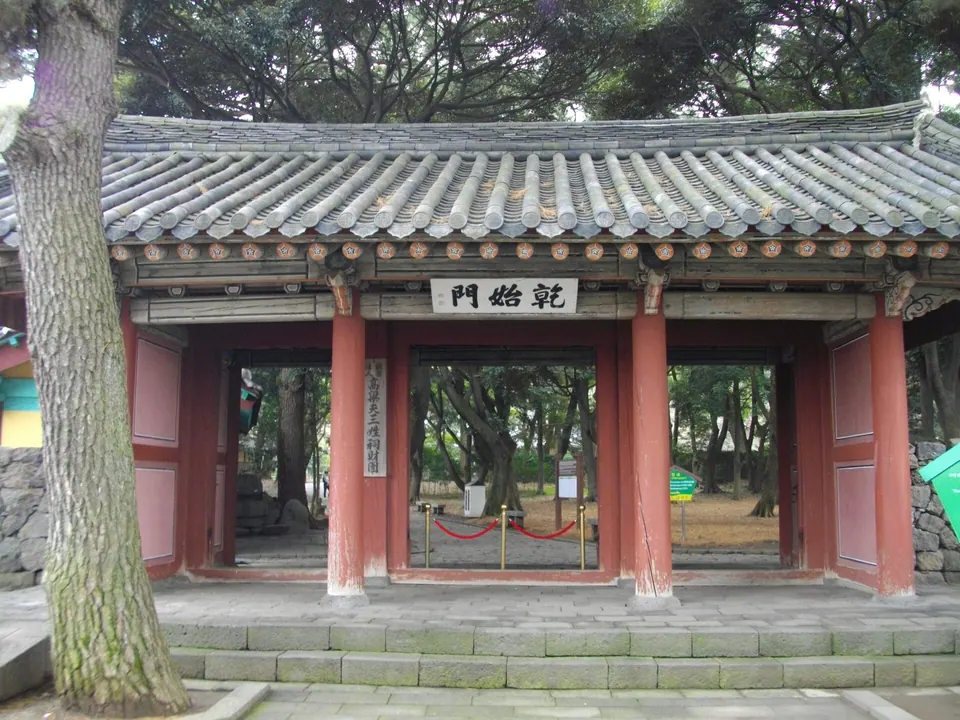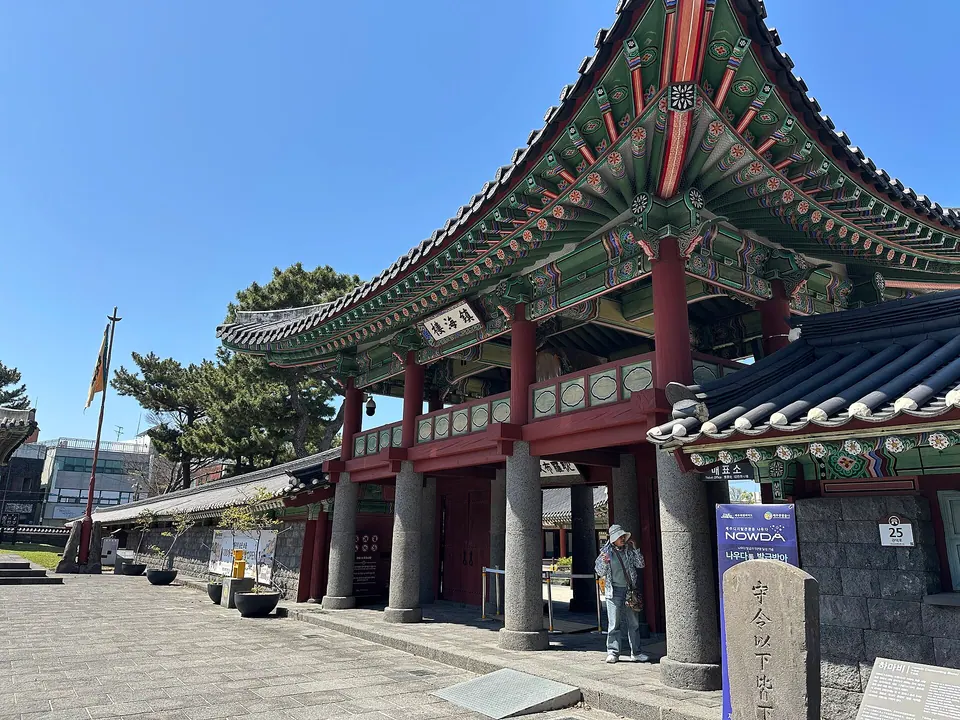
Jejumok Gwana
Explore the history of the old town’s boundaries alongside its administrative spaces.
Visitor guide →Jeju City and the north · Culture and history
Jeju Fortress is a historic site in the old town with surviving traces and restored sections of the former town walls. Combine it with nearby Ohyeondan Altar to explore the distinct histories of fortifications and scholarship.
Travel planning at a glance
Jeju Fortress is a historic site with surviving traces and reconstructed sections of the former Jeju town fortress. Allow 20–30 minutes to observe the walls, and check access to high walls and stairs. Plan it together with Ohyeondan Altar in the same area to avoid repeated journeys.
Operating and access information is based on the official sources below. Recommended routes and visit durations are editorial suggestions. Check each place's description to see whether waiting, meals and similar time are included, and allow separate time for travel between places.
Jeju Fortress is the remains of fortifications that protected central Jeju. Its exact initial construction date is described as unknown, so distinguish proposed origins from the remains visible today.
The description explains that the fortress was severely damaged when its stones were used for harbor reclamation during Japanese colonial rule. Explore the old town’s boundaries and changes through the few surviving sections.
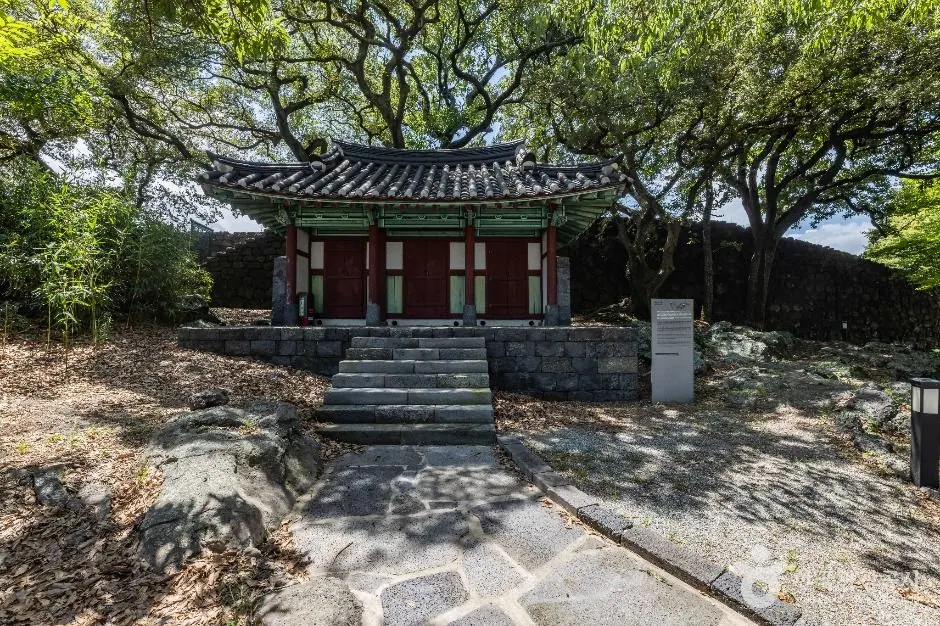
Partly reconstructed walls are among the features visible today. Do not assume every stone survives as originally laid; check the on-site signs explaining the reconstruction and historic remains.
The suggested 20–30 minutes covers a short look at the walls. Follow the actual public routes around high stairs and walls, and do not approach edges or enter closed areas for photos.
With children, discuss why towns were surrounded by walls in the past. Observing the height and position of the stone walls helps you imagine old Jeju within the modern old town.
Do not move heritage stones or climb on the walls. The old fortifications adjoin present-day living spaces, so respect residents’ access and private-property boundaries.
The main address for Jeju Fortress given by the Jeju Tourism Organization is 제주시 오현길 56. Neighboring Ohyeondan Altar at 오현길 61 is a separate historic site: the fortress walls and the altar have different purposes for observation. Check the actual entrances and public heritage paths, and combine visits within the same area.
Jejumok Gwana is an option for continuing into the history of administration within the fortress. Samseonghyeol is a different site connected with history and myth; take time to compare the meanings of nearby sites rather than counting how many you visit.
Visitor location · 제주특별자치도 제주시 오현길 56
The address given is 오현길 56, as registered for Jeju Fortress by the Jeju Tourism Organization. Neighboring Ohyeondan Altar at 오현길 61 is a separate historic site. Distinguish the route for viewing the fortress walls from that for the altar, and follow public paths.
Location reference ↗Explore the history of the old town’s boundaries alongside its administrative spaces.
Visitor guide →An option for comparing other sites connected with history and myth in the old town.
Visitor guide →This is a historic site with some surviving traces and reconstructed sections. The entire Jeju town fortress is not described as surviving intact.
Jeju Fortress is listed at 오현길 56 by the Jeju Tourism Organization, while neighboring Ohyeondan Altar is listed at 오현길 61. Plan them together in the same area, while distinguishing the historical purposes of the fortress and altar.
The official tourism description says the exact date is unknown. Distinguish proposed origins from verified records.
Check which routes are open to visitors on-site. Do not climb onto walls or high edges, or enter restricted areas without permission.