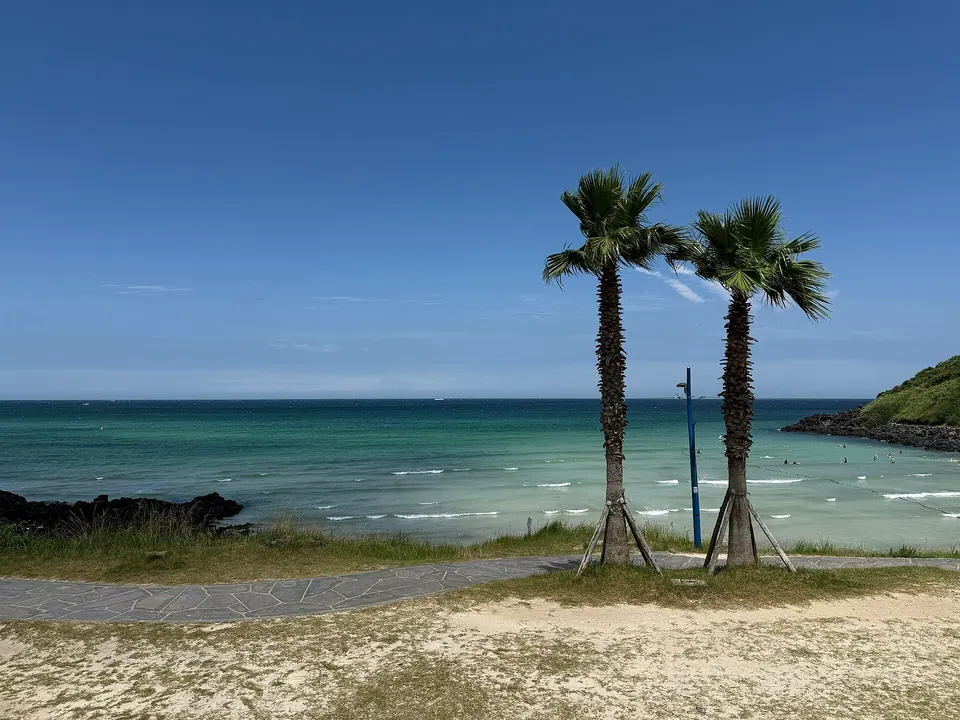
Hamdeok Beach
Continue from a cultural site in Jocheon to relaxation on the Hamdeok coast.
Visitor guide →East · Culture and history
The Buddha Sharira Stupa for World's Peace and Unification is a Buddhist site in Jocheon created to express the meaning of peaceful reunification. Explore its hemispherical stupa, Buddha decorations and symbolism linking Hallasan and Baekdusan.
Travel planning at a glance
At the Buddha Sharira Stupa for World’s Peace and Unification, explore hemispherical Buddhist architecture and symbols of peace. Allow 30–45 minutes in the grounds open to visitors; do not assume the interior and upper floors are always open. Respect religious activities and follow the day’s access guidance.
Operating and access information is based on the official sources below. Recommended routes and visit durations are editorial suggestions. Check each place's description to see whether waiting, meals and similar time are included, and allow separate time for travel between places.
The Buddha Sharira Stupa for World’s Peace and Unification · Jeju Tourism Organization ↗ · Checked
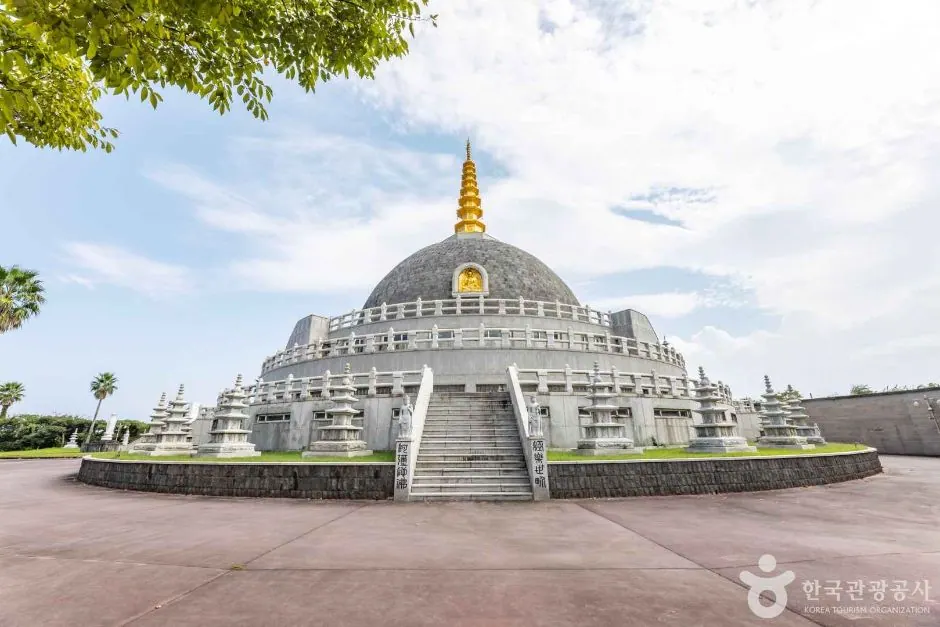
The Buddha Sharira Stupa for World’s Peace and Unification was created to pray for the peaceful reunification of North and South Korea. Read the architectural explanation of its symbolic link between Hallasan and the direction of Cheonji crater lake on Baekdusan.
The site is described as a hemispherical stupa completed in 1998. Observe how its exterior differs from conventional temple halls, considering both its form and the meaning of peace expressed in the space.
The Buddha Sharira Stupa for World’s Peace and Unification · Jeju Tourism Organization ↗ · Checked
The site’s description highlights Buddha figures carved into tiles on the body of the stupa. View the overall outline first, then examine decorations where close viewing is permitted to understand both the architectural form and the craftsmanship.
The 30–45-minute suggestion covers a short visit to areas open to the public. Check on-site whether the interior or upper floors are accessible, and do not enter closed stairs or passages for a view.
The Buddha Sharira Stupa for World’s Peace and Unification · Jeju Tourism Organization ↗ · Checked
With children, briefly discuss why people pray for peace here. Visit as a cultural experience exploring the symbolism, and follow the temple’s guidance when deciding whether to participate in any particular ritual.
Move quietly out of consideration for people praying or practising. Follow on-site guidance on photography, items brought in and indoor access, and do not climb on or damage the sculptures.
The Buddha Sharira Stupa for World’s Peace and Unification · Jeju Tourism Organization ↗ · Checked
The main address is 조천읍 일주동로 884. Check the actual entrance and parking guidance, and watch for traffic on the nearby main roads as you approach.
Hamdeok Beach is an option for seaside relaxation after a short cultural visit. If continuing to Jeju 4·3 Peace Park, treat the religious architecture and the park’s reflection on peace through Jeju’s modern history as distinct experiences.
Visitor location · 제주특별자치도 제주시 조천읍 일주동로 884
Location reference ↗The Buddha Sharira Stupa for World’s Peace and Unification · Jeju Tourism Organization ↗ · Checked
Continue from a cultural site in Jocheon to relaxation on the Hamdeok coast.
Visitor guide →Reflect on the meaning of peace alongside other historical and memorial sites.
Visitor guide →This Buddhist site prays for the peaceful reunification of North and South Korea, with symbolism linking Hallasan and Baekdusan.
Check which areas are open on the day. Access to the exterior does not guarantee entry to the interior or upper floors.
Allow about 30–45 minutes to view the grounds and architecture in areas open to the public.
It is a Buddhist site. Respect prayer and spiritual practice, and follow the on-site access and photography guidance.