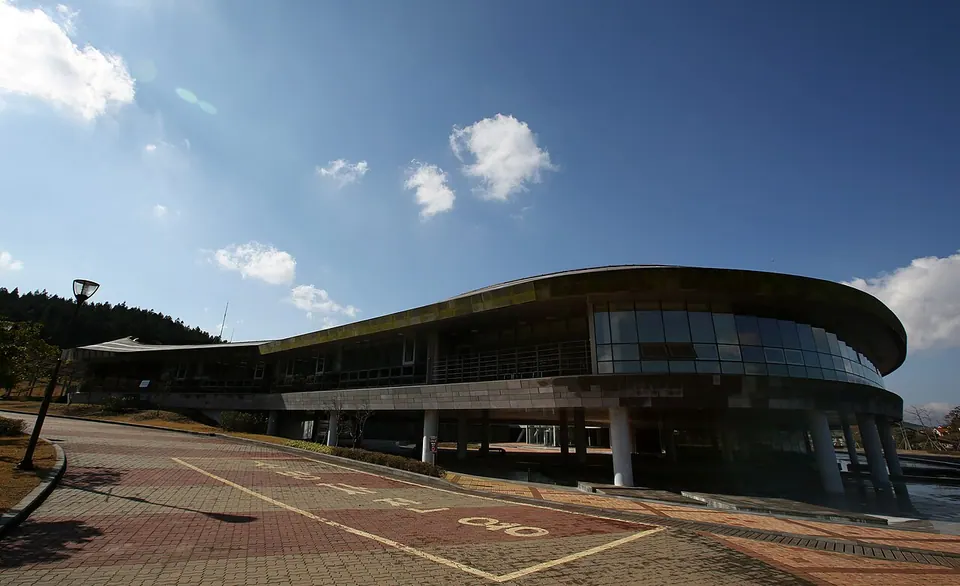
Jeju World Natural Heritage Center
Connect forest and wetland observation with exhibitions on Jeju's geology and natural heritage.
Visitor guide →East · Forests and gotjawal
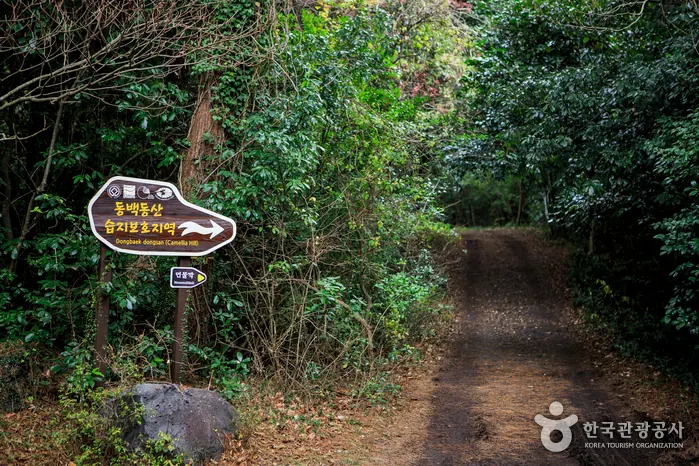
Seonheulgot Dongbaek-Dongsan is an ecological area combining Seonheul-ri's Gotjawal forest and Meonmulkkak Wetland. Unlike a camellia garden focused on flowers, this forest walk explores relationships among trees, lava terrain, water and village life.
Travel planning at a glance
At Dongbaek-Dongsan, observe Seonheul Gotjawal, Meonmulkkak Wetland and traces of the village's use of forest and water. We suggest a 1.5–2-hour forest walk; check the day's visitor sections, interpretation bookings and wetland-protection guidance.
Operating and access information is based on the official sources below. Recommended routes and visit durations are editorial suggestions. Check each place's description to see whether waiting, meals and similar time are included, and allow separate time for travel between places.
Seonheulgot Dongbaek-Dongsan · Jeju Tourism Organization ↗ · Checked
Seonheulgot Dongbaek-Dongsan: visitor address in 한국관광공사 public cultural information ↗ · Checked
Dongbaek-Dongsan is an ecological area of connected forest and wetlands in Seonheul. Meonmulkkak, where water remains within lava terrain, shows how Jeju's Gotjawal forests and water are linked.
The wetland is also linked to the village's past water use. Observe quietly from designated areas, considering water as both wildlife habitat and part of residents' everyday lives.
Seonheulgot Dongbaek-Dongsan · Jeju Tourism Organization ↗ · Checked
Choose this visit for Gotjawal's varied trees rather than expecting red camellia photo spots from the name alone. Learning plant names and the wetland's significance is central to the experience.
The suggested 1.5–2 hours is an editorial estimate for slow walking and observation. Check the map and open paths at the visitor information area, and arrange interpretation or program bookings according to their separate conditions.
Seonheulgot Dongbaek-Dongsan · Jeju Tourism Organization ↗ · Checked
With children, compare wet areas with drier forest, and observe leaves and bark. Walk quietly and appreciate what you find rather than expecting guaranteed sightings of particular animals or rare plants.
Do not enter the wetland, move stones, touch organisms or collect them. Wear walking shoes for wet rocks and dirt paths, and remain on designated paths even on a short route.
Seonheulgot Dongbaek-Dongsan · Jeju Tourism Organization ↗ · Checked
The representative visitor address is 77 Dongbaek-ro, Jocheon-eup. Distinguish the broad forest parcel from the actual entrance, use the information area as your destination and check your return route before setting out.
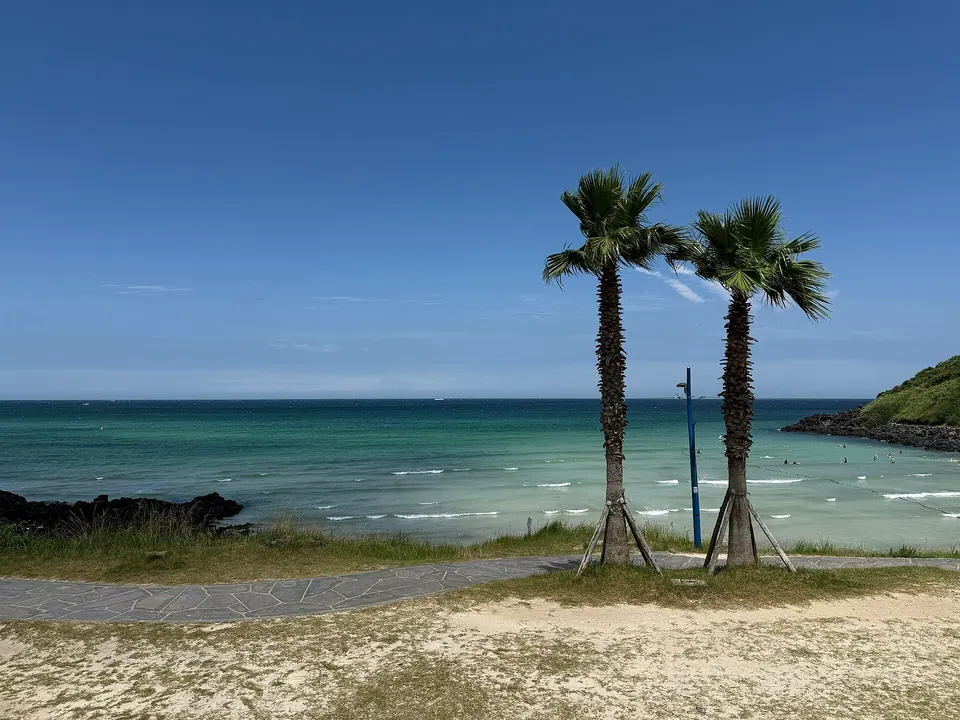
Jeju World Natural Heritage Center can add exhibitions explaining Jeju's geological background. Hamdeok Beach offers a comparison between forest, wetlands and the sea; after a long forest walk, focus the coastal stop on rest.
Visitor location · 제주특별자치도 제주시 조천읍 동백로 77
77 Dongbaek-ro is the representative visitor address, including the information area. Distinguish the broad forest parcel from the actual entrance and check the on-site map.
Location reference ↗Seonheulgot Dongbaek-Dongsan · Jeju Tourism Organization ↗ · Checked
Seonheulgot Dongbaek-Dongsan: visitor address in 한국관광공사 public cultural information ↗ · Checked
Connect forest and wetland observation with exhibitions on Jeju's geology and natural heritage.
Visitor guide →An eastern coastal rest option after an ecological walk in Seonheul.
Visitor guide →The main focus is the ecology of Gotjawal forest and wetlands. The experience differs from a camellia garden centered on flower photo spots.
It is described as a wetland within Dongbaek-Dongsan, connected with the village's past water use and wildlife habitat.
Its diverse ecology is described, but sightings of particular organisms are not guaranteed. Observe quietly from marked paths and do not collect specimens.
We suggest 1.5–2 hours to explore the forest and wetlands slowly. Adjust to the sections open that day and your companions' walking pace.