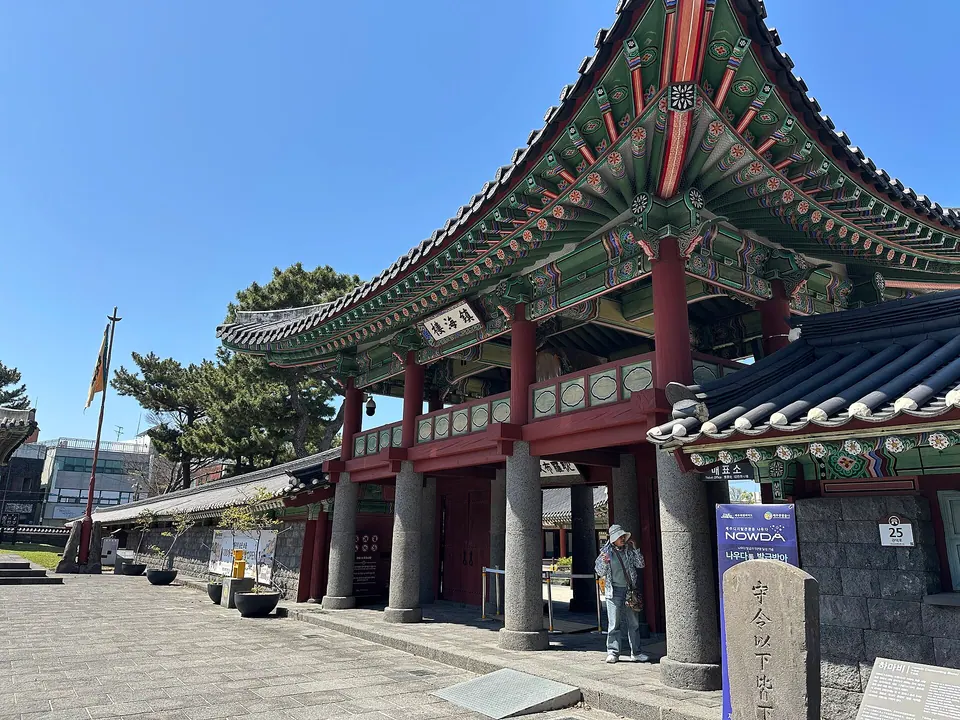
Jejumok Gwana
Explore the history of scholarship and historic administrative spaces in the old town together.
Visitor guide →Jeju City and the north · Culture and history
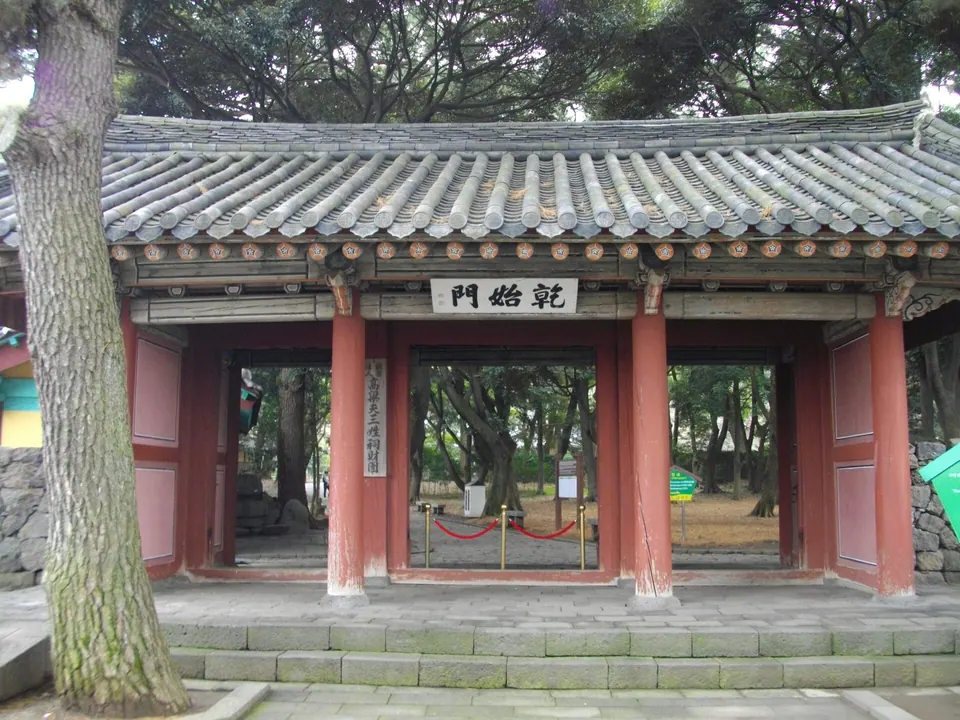
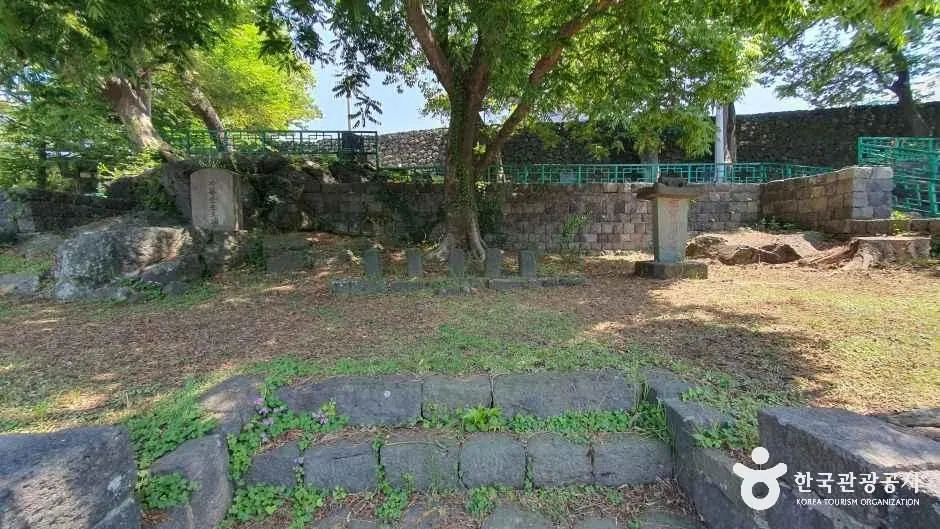
Ohyeondan Altar is a historic site in Jeju's old town honoring Kim Jeong, Song In-su, Kim Sang-heon, Jeong On and Song Si-yeol for their contributions to education in Jeju. Explore stories of exile and scholarship through the altar, memorial stones, rock inscriptions and nearby remains of the old fortress.
Travel planning at a glance
Ohyeondan Altar honors Kim Jeong, Song In-su, Kim Sang-heon, Jeong On and Song Si-yeol, who contributed to education and scholarship after being exiled or appointed to Jeju during the Joseon period. Allow 30–45 minutes to view the open historic areas and information panels. Check guided explanations and memorial rite schedules separately.
Operating and access information is based on the official sources below. Recommended routes and visit durations are editorial suggestions. Check each place's description to see whether waiting, meals and similar time are included, and allow separate time for travel between places.
The five figures honored at Ohyeondan are Kim Jeong, Song In-su, Kim Sang-heon, Jeong On and Song Si-yeol. Explore the altar and information panels for their stories and contributions to education and scholarship after being exiled or appointed to Jeju.
The introduction explains why an altar and memorial stones were erected to honor the five figures after the seowon academy was abolished. Distinguish today's space from the history of the former academy.
The official introduction lists the altar, memorial stones associated with the figures and rock inscriptions. Use information panels to understand the inscriptions and their locations, and view nearby old fortress remains from open paths.
The suggested 30–45 minutes is a short itinerary for visiting a cultural heritage site. If you want guided explanations, check participation on the day. Give way to memorial rites and events taking place in visitor areas.
Discuss with children why people erect memorial stones and altars to remember others. Reading the names and explanations can reveal the meaning of a small historic site.
Do not touch stones or memorials, or make rubbings without permission. Do not climb onto the altar. Follow photography and interior-access guidance, and visit quietly.
The reference address is 제주시 오현길 61. Confirm the actual site entrance and watch for traffic in the lanes. Do not enter nearby residential spaces or private property without permission.
Jejumok Gwana is an option for exploring Jeju's administrative history alongside this visit. Samseonghyeol offers another setting for history and mythology; plan with each site's meaning and visiting conditions in mind.
Visitor location · 제주특별자치도 제주시 오현길 61
Location reference ↗Explore the history of scholarship and historic administrative spaces in the old town together.
Visitor guide →An option for comparing the history, mythology and visiting arrangements of different historic sites.
Visitor guide →It honors Kim Jeong, Song In-su, Kim Sang-heon, Jeong On and Song Si-yeol. These five figures contributed to education and scholarship after being exiled or appointed to Jeju during the Joseon period.
It is described as a space honoring their legacy with an altar and memorial stones after the seowon academy was abolished. Distinguish the former academy from the present historic site.
Do not make rubbings or touch the stones without permission. Follow heritage protection rules and on-site guidance.
Cultural tourism interpretation is listed. Check the day's times and whether you can join.