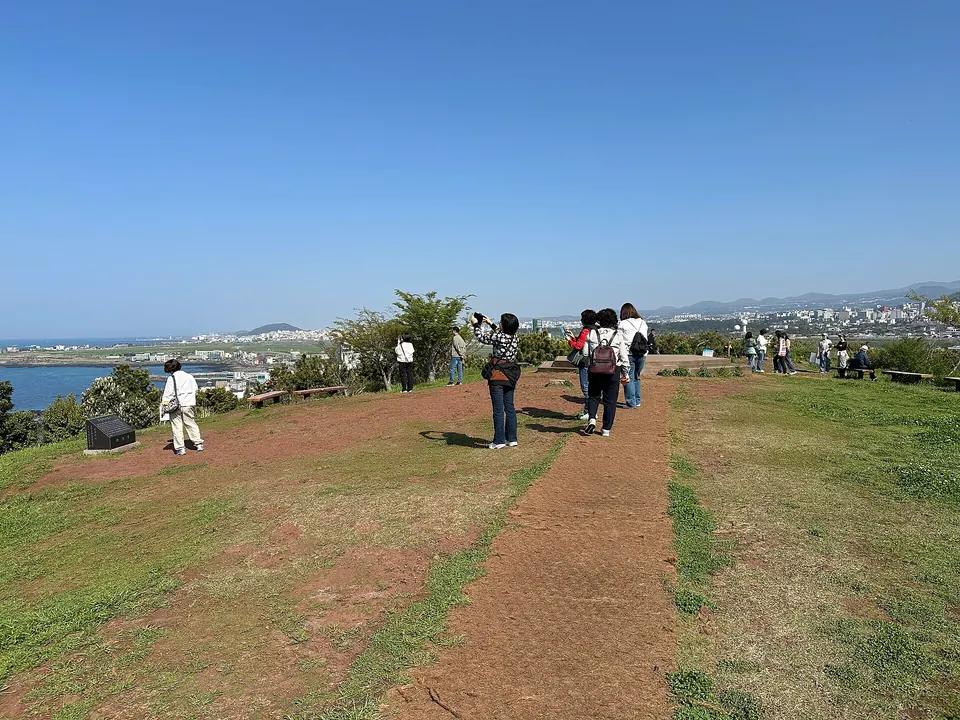
Dodubong Peak
Add a short viewpoint walk around Dodu after browsing the market.
Visitor guide →Jeju City and the north · Culture and history
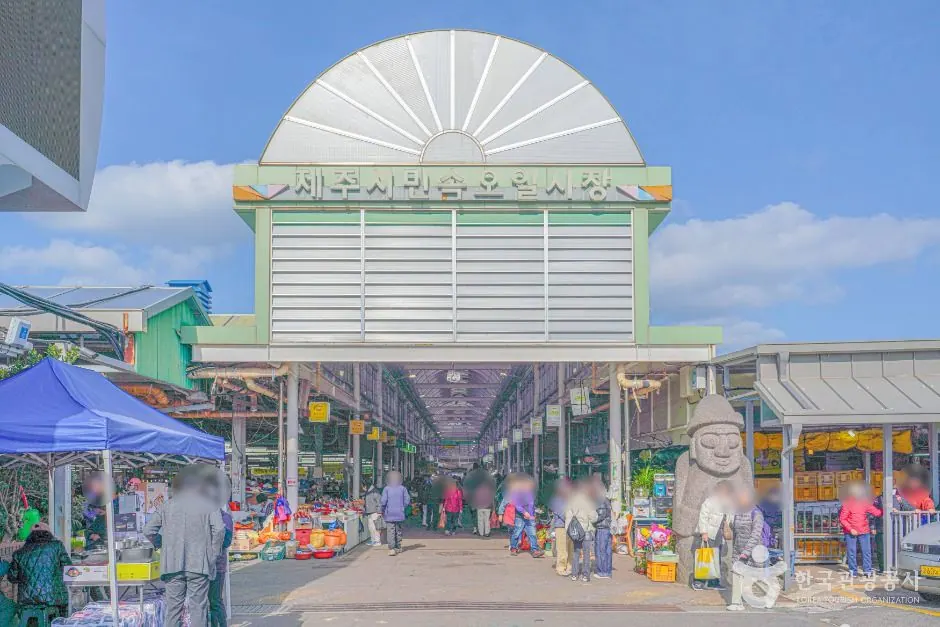
Jeju Traditional Five-Day Market is a large market in the Dodu area of Jeju City, bringing together farm produce, seafood, household goods and food on set market days. Match your visit to a market day to see local daily life while exploring near the airport.
Travel planning at a glance
Jeju Traditional Five-Day Market opens on the 2nd, 7th, 12th, 17th, 22nd and 27th of each month in Jeju City. Its address is 오일장서길 26, with produce, seafood, flowers, onggi pottery, general goods and more. Allow 1–2 hours as an editorial itinerary for market-day browsing and a meal.
Operating and access information is based on the official sources below. Recommended routes and visit durations are editorial suggestions. Check each place's description to see whether waiting, meals and similar time are included, and allow separate time for travel between places.
Jeju Traditional Five-Day Market · Jeju Tourism Organization introduction ↗ · Checked
Jeju Traditional Five-Day Market is a large five-day market in the Dodu area. Alongside produce and seafood, flowers, onggi pottery, clothing and general goods offer a close view of residents' shopping. Compare product areas rather than visiting food shops alone.
Unlike permanent Dongmun Market, this market comes alive on its scheduled market days. Even without buying much, browsing potted plants, ingredients and household goods together can be enjoyable. The market is large, so choosing areas of interest and agreeing on a meeting point makes moving around easier.
Jeju Traditional Five-Day Market · Jeju Tourism Organization introduction ↗ · Checked
Official tourism information lists market days as the 2nd, 7th, 12th, 17th, 22nd and 27th of every month. Check your travel date first; do not assume the same shops and food stalls are all open on other days. Allow 1–2 hours as an editorial itinerary for browsing and a meal.
There is much to browse on market days, so choose a food or product first, then explore another lane. Shops may start packing away as closing approaches; allow daylight time for a longer visit. Before an airport departure, add separate time for market parking, rental-car return and security screening.
Jeju Traditional Five-Day Market · Jeju Tourism Organization introduction ↗ · Checked
With children, start by finding different colors and shapes in flowers, onggi pottery and fruit. When the market is large and busy, agree on a meeting place such as an entrance or public facility. Alternating food-queue waits with walking can make a visit with older relatives less tiring.
Decide what to buy after asking about transport and storage requirements. Potted plants, household goods and foods create different kinds of luggage, so avoid long coastal walks carrying market purchases. Prices and product assortments vary by season and shop; compare explanations from several businesses.
Jeju Traditional Five-Day Market · Jeju Tourism Organization introduction ↗ · Checked
The destination for Jeju Traditional Five-Day Market is 제주시 오일장서길 26. Official information describes it as near Jeju Airport and Dodu Port, but market-day traffic and parking queues require extra time. With much shopping, plan a route that lets you organize purchases in your vehicle or accommodation before or after browsing.
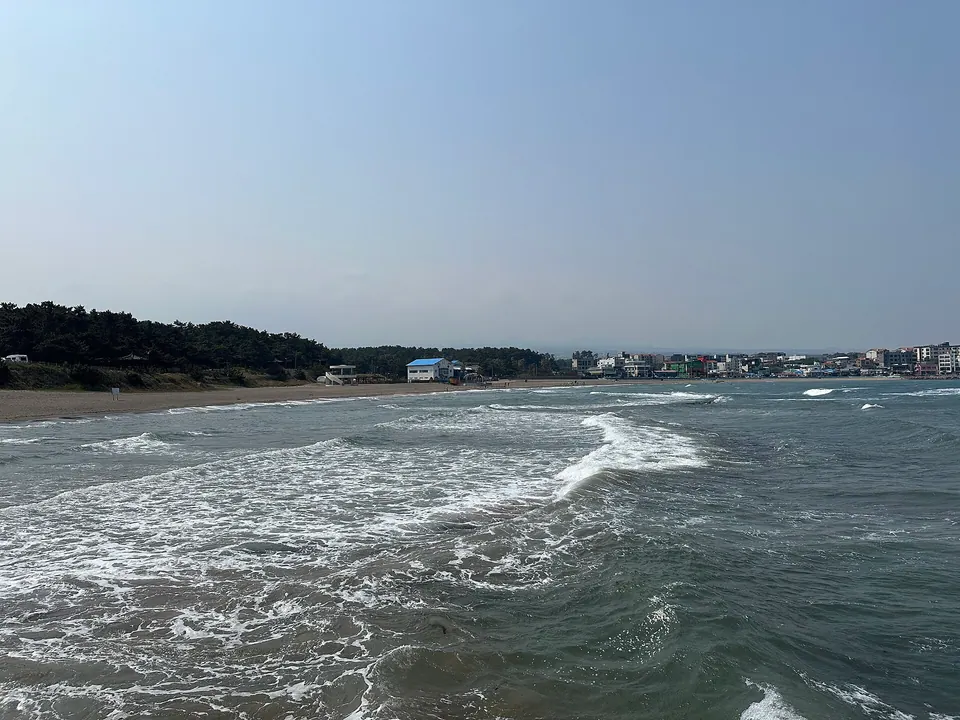
Add a short viewpoint walk on Dodubong or sea views at Iho Tewoo Beach. Organizing market purchases before heading to the coast gives the day a different kind of sightseeing. If visiting the oreum or beach first, leave time to reach market-day shops before they close.
Visitor location · 제주특별자치도 제주시 오일장서길 26
Location reference ↗Jeju Traditional Five-Day Market · Jeju Tourism Organization introduction ↗ · Checked
Add a short viewpoint walk around Dodu after browsing the market.
Visitor guide →An option for adding sea views along the coast near the airport.
Visitor guide →Official market days are the 2nd, 7th, 12th, 17th, 22nd and 27th of every month. Check first that your visit falls on a market day.
No. The five-day market opens on market days in the Dodu area, while Dongmun Traditional Market is a permanent market in Jeju City's old town.
It also has produce, seafood, flowers, onggi pottery, clothing, general goods and other everyday items. Explore both food stalls and residents' shopping areas.
It can be an option if the market day fits your departure time. Allow separate time for market queues, packaging, parking, rental-car return and airport procedures.